Top 10 Programming Languages to Learn for IT Engineers in the year 2026: A Complete Career Guide
Top 10 Programming Languages to Learn for every IT Engineers in 2026
The IT industry is evolving it faster than ever. New technologies such as Artificial Intelligence, cloud computing, cybersecurity, automation, and data analytics are transforming how businesses operate. As a result, companies are actively looking for IT engineers who possess strong programming skills and can adapt to emerging technologies.
However, with hundreds of programming languages available, choosing the right one can be overwhelming. Should you start with Python? Is Java still worth learning? Is Rust the future? Which language offers the best salary?
This guide answers those questions by highlighting the **top 10 programming languages to learn for IT engineers in 2026**, explaining where each language excels, who should learn it, and how it can shape your career.
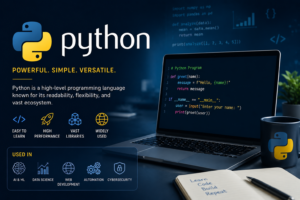
1. Python – The Most Flexible Programming Language
If one language dominates today’s technology landscape, it’s Python. Its clean syntax and readability make it beginner-friendly, while its extensive ecosystem makes it powerful enough for enterprise applications.
Python powers many of today’s fastest-growing fields, including AI, machine learning, data science, automation, and web development.
Best For
* Artificial Intelligence
* Machine Learning
* Data Analytics
* Automation
* Backend Development
Why IT Engineers Should Learn Python
Python allows every IT development engineer to build complex applications with fewer lines of code. Its massive library support significantly reduces development time, making it one of the most valuable skills in today’s job market.
2. Java – The Enterprise Industry Standard
Despite the rise of newer programming languages, Java continues to dominate enterprise software development from its initiation. Banks, insurance companies, healthcare providers, and multinational corporations still rely on Java for mission-critical applications.
Its “Write Once, Run Anywhere” philosophy has made it one of the most trusted programming languages for decades.
Best For
* Enterprise Applications
* Android Development
* Banking Software
* Cloud Services
Why It Still Matters
Java offers exceptional stability, security, scalability, and long-term career opportunities.
3. JavaScript – The Language of the Modern Web
Every interactive website you visit today uses JavaScript in some form. It has evolved far beyond browser scripting and now supports full-stack development through technologies like Node.js.
Whether you’re building websites, dashboards, APIs, or web applications, JavaScript remains an essential skill.
Best For
* Frontend Development
* Backend APIs
* Full-Stack Development
* Interactive Web Applications
Career Advantage
Learning of the JavaScript opens opportunities in startups, software companies, and freelance web development.
4. TypeScript – JavaScript for Large-Scale Applications
As applications become larger and more complex, developers increasingly choose TypeScript instead of plain JavaScript.
This language introduces static typing, helping developers catch errors during development rather than after deployment.
Best For
* Enterprise Web Applications
* Angular Development
* React Projects
* Large Development Teams
Why Companies Prefer It
It improves code quality, enhances maintainability, and reduces debugging time.
5. C# – Microsoft’s Powerful Development Language
C# is a modern, object-oriented programming language developed by Microsoft .It is widely used in enterprise software, desktop applications, cloud platforms, and game development.
Developers working within the Microsoft ecosystem often of choose C# because of its a seamless integration with .NET
Best For
* Enterprise Software
* ASP.NET Web Applications
* Desktop Software
* Unity Game Development
6. Go (Golang) – Built for Cloud Computing
Designed by Google, Go has become a favorite for cloud-native applications and distributed systems.
Its lightweight syntax, fast execution speed, and built-in concurrency support make it perfect for handling millions of requests efficiently.
Best For
* Cloud Platforms
* Microservices
* Backend Development
* DevOps Tools
Growing Demand
Many cloud infrastructure companies now consider Go one of their preferred programming languages.
7. C++ – The Performance Champion
When performance is the highest priority, C++ remains difficult to replace.
Many operating systems, embedded devices, gaming engines, and robotics applications continue to rely on C++ because it provides direct control over hardware resources.
Best For
* Game Engines
* Embedded Systems
* Robotics
* Operating Systems
* High-Performance Software
Learning C++ also strengthens your understanding of memory management and computer architecture.
8. SQL – The Language Behind Every Database
Almost every software application stores information inside a database. Whether you’re developing applications, analyzing business data, or maintaining enterprise systems, SQL is a must-have skill.
Unlike traditional programming languages, SQL specializes in storing, retrieving, updating, and managing data efficiently.
Best For
* Database Management
* Data Analysis
* Backend Development
* Business Intelligence
No IT engineer should overlook SQL, regardless of specialization.
9. Kotlin – The Future of the Android Development
Kotlin is a modern statically typed programming language developed by JetBrains in the year 2010.
Compared to Java, Kotlin reduces repetitive code, improves safety, and speeds up mobile app development.
Best For
* Android Apps
* Mobile Development
* Cross-Platform Projects
Developers entering mobile application development should prioritize Kotlin over older alternatives.
10. Rust – A highly popular ,memory safe system programing language
Rust has experienced remarkable growth because it combines high performance with memory safety—without sacrificing speed.
Technology companies are increasingly adopting Rust to build secure software, cloud infrastructure, and blockchain applications.
Best For
* Systems Programming
* Cybersecurity
* Blockchain
* Cloud Infrastructure
Rust may have a steeper learning curve, but it rewards developers with exceptional performance and reliability.